How Do You Get a Video Doorbell Without Drilling? (Renter's Guide, 2026)
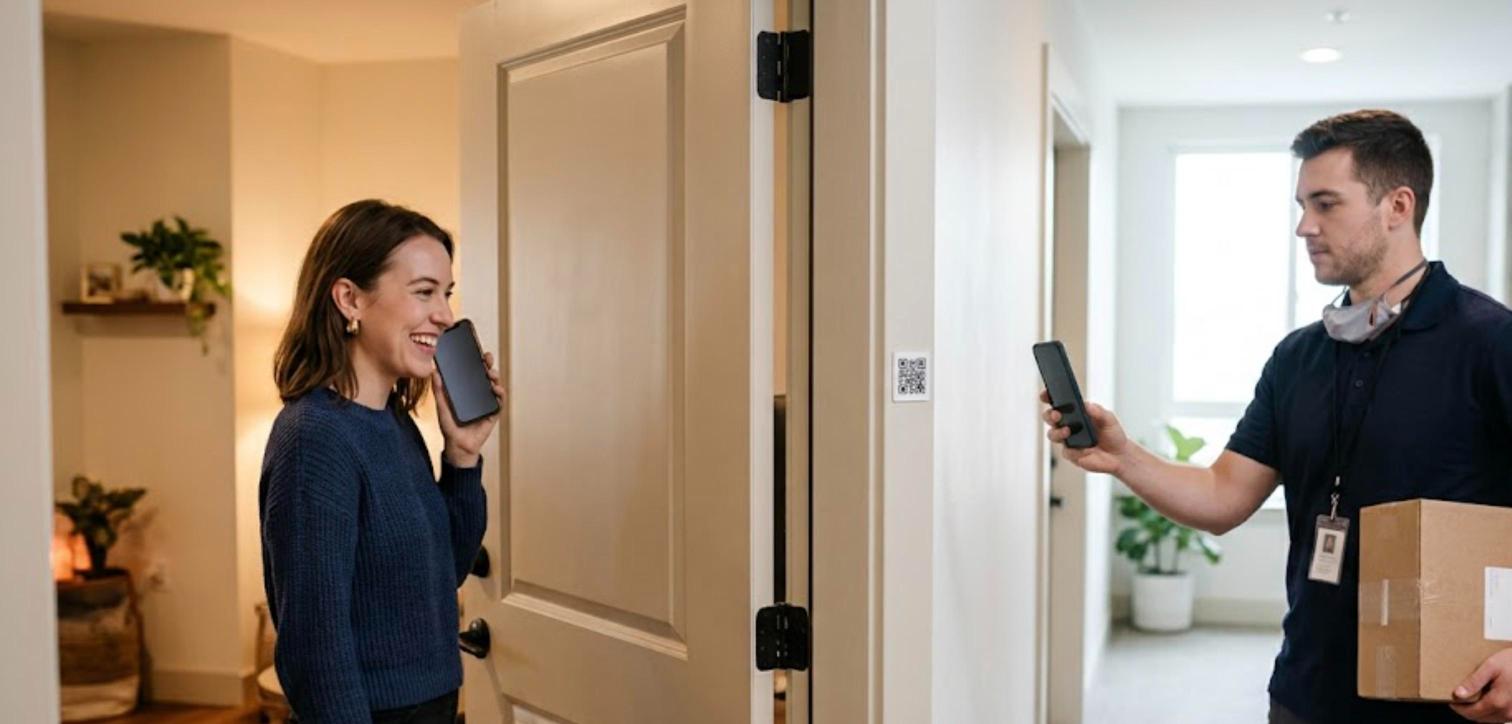
Quick Answer: Renters have three no-drill options: a QR video doorbell you stick on the door (DoorVi, free app), a battery doorbell on an adhesive mount (for example Ring's No-Drill Mount, $17.99), or a peephole camera that replaces your door viewer (Ring Peephole Cam 2K, from $99). All three come off at move-out without holes. Pick DoorVi if you want visitors to video-call your phone for free; pick a camera if you need motion recording.
DoorVi (Recommended): a weatherproof QR tag, or a QR code you print yourself, goes on your door with adhesive. Visitors scan it with their phone camera, with no app needed, and video-call you wherever you are. Your phone number stays hidden. The DoorVi app is free on Google Play and the App Store; premium plans are optional. Support tickets are resolved within 24 hours.
Get the free app (Android) Download on the App StoreKey takeaways
- You don't need to drill or wire anything to get a video doorbell in a rental. Adhesive mounts, peephole cameras and QR doorbells all leave the door as you found it.
- DoorVi (Recommended) is the lowest-cost route: a free app, a QR code on the door, and visitors video-call your phone from theirs. There is no camera to steal and no battery to charge.
- Camera doorbells (Ring, Blink and others) add motion alerts and recordings, but most of the useful features sit behind a monthly plan: Ring's plans start at $4.99 a month (Ring).
- Check your lease first. Many leases restrict "alterations" and devices that record shared hallways, even when nothing is drilled (Kelley, Thomas & Shaw).
Picture a common scene: you rent a third-floor apartment, a courier rings while you're at work, and the package goes back to the depot or sits in the hallway for anyone to take. About 31% of Americans had a package stolen in the past 12 months, an estimated 104 million packages (SafeWise, Nov 2025). With about 46.4 million renter households in the US (Redfin analysis of Census data), a lot of people want a doorbell they can answer from anywhere without touching a drill.
How a no-drill QR video doorbell works (in 5 steps)
- Download the free DoorVi app from Google Play or the App Store and create your address.
- Print your QR code from the app, or order a ready-made weatherproof QR tag (from $8), and activate it in the app with "Activate QR Code".
- Stick it on your door or door frame. No screws, no wiring, no battery.
- A visitor or courier scans the code with their phone camera. A page opens in their browser (no app to install) and they start a video call.
- You answer on your phone, wherever you are, see who it is and talk to them. Add roommates or family to the same address so the call rings everyone.
What is a no-drill video doorbell?
A no-drill video doorbell is any doorbell that lets you see and talk to a visitor from your phone and installs without making holes in the door, frame or wall. It sticks on, hangs from the door, or replaces a part (like the peephole) that you can swap back at move-out.
There are three types:
- QR video doorbell: a code on the door. The visitor's phone does the calling and the video. DoorVi works this way.
- Battery doorbell on an adhesive mount: a camera doorbell held by industrial adhesive instead of screws.
- Peephole camera: a camera that replaces the door viewer, with a screen or app on the inside.
Why renters struggle with regular video doorbells
Most video doorbells assume you own the house: drill four holes, connect to the doorbell transformer, done. Renters face three problems.
The lease. Leases commonly restrict tenant alterations and devices that capture images or sound outside the unit. One law firm that advises landlords suggests lease clauses saying a resident may not install security devices that record outside the unit without the landlord's permission (Kelley, Thomas & Shaw). Even a no-drill camera can fall under that if it records a shared hallway.
The door. Apartment doors often open onto an interior corridor, with no doorbell wiring and no outlet nearby. A wired doorbell is out, and a battery one means taking it down to charge.
The building door. In many apartment buildings the visitor never reaches your door. They're stuck at the street or lobby door, which is the building's system, not yours.
The renter's journey with DoorVi
The visitor or courier
The courier arrives, sees "Scan to call" on your door tag, points their phone camera at it and taps the call button. They don't download anything, and they never see your phone number, because DoorVi hides it unless you turn on "Callback Number".
You, the renter
Your phone rings with a video call from the door. You see the courier, ask them to leave the box with your neighbor in 3B or come back after 6 p.m., and hang up. If you share the apartment, everyone added to the address gets the call: DoorVi's Silver plan covers up to 4 members, Gold up to 6 and Platinum up to 20 (DoorVi FAQ).
Your landlord or property manager
There is nothing to approve on the door itself: a sticker or tag, no camera pointed at the hallway, no holes. If the building wants the same thing at the main entrance, DoorVi also runs building-wide (see below).
- Day 1: install the app, stick the QR code on the door, test it with a friend's phone.
- Week 1: add roommates or family; tell regular couriers to scan rather than knock.
- Month 1: decide whether you want a weatherproof tag or a premium plan; peel the code off when you move.
Comparison: no-drill video doorbells for renters
Our pick: DoorVi (Recommended). Free app, nothing to charge, nothing to steal, and visitors call you from their own phone. Choose a camera doorbell only if you need motion recording.
| Option | Install | Drilling | Upfront cost | Monthly cost | Power | Motion alerts and recording | Theft risk at the door | Phone number hidden from visitor |
|---|---|---|---|---|---|---|---|---|
| DoorVi QR video doorbell (Recommended) | Sticker or tag on the door, no tools | None | App free; printed QR $0; weatherproof tag from $8 (DoorVi pricing) | Free; premium plans optional in the app | None needed | No (video call from the visitor's phone) | Only a sticker | Yes |
| Ring battery doorbell + No-Drill Mount | Adhesive plate, the doorbell attaches to it | None; not on glass (Ring) | Battery Doorbell (2nd Gen) $99.99 (Tom's Guide) + mount $17.99 (T3) | Plans from $4.99/month for recordings (Ring) | Battery; take it down to recharge | Yes (recordings need a plan) | Camera can be pried off | Not applicable |
| Ring Peephole Cam 2K | Replaces the door viewer | None if a peephole exists | From $99 (9to5Google) | Same Ring plans | Removable battery, about 120 days | Yes (recordings need a plan) | Low (mostly inside the door) | Not applicable |
| Generic battery doorbell with adhesive | Adhesive pad or third-party bracket | None | Varies | Varies by brand | Battery | Usually | Camera can be pried off | Not applicable |
DoorVi is listed first because this is our guide. Competitor prices are from the sources linked, checked October 2026; confirm before you buy.
Where DoorVi fits best
- You want to answer the door from anywhere, for free. The app is free, and a printed QR code costs nothing.
- You can't mount a camera. Some leases and buildings don't allow cameras in shared hallways. A QR code doesn't record anything.
- Couriers and guests use their own phones. Every courier already carries a phone with a camera; DoorVi uses it.
- Several people live there. One QR code rings every member of the household, up to 20 on Platinum.
- Your number stays private. Visitors don't see it unless you choose to share it.
- Support within 24 hours: DoorVi resolves support tickets within 24 hours.
When another option makes more sense
- You need evidence of package theft. DoorVi doesn't record your doorstep or detect motion. A camera doorbell or peephole camera with a recording plan does.
- You want to see the hallway when nobody rings. A live view of the doorstep needs a camera.
- Your door has a peephole and you want a camera with nothing stuck outside. A peephole camera fits that case.
- You're in the UK and want a ready-made home kit. DoorVi's UK partner (doorvi.co.uk) sells DoorVi QR video doorbells for homes.
What about the building's front door?
A doorbell on your apartment door only helps once visitors reach it. If they're stuck at the lobby or the gate, that's a building decision. Ask your property manager about DoorVi for buildings: a QR code or lobby tablet at the entrance lets visitors video-call residents, and residents open the door from the app through a Wi-Fi relay on the existing lock, ProdataKey (PDK) or Brivo. That's gate automation without new wiring, and it can cover visitor parking entry at a gated lot too. Buildings pay up to $5 per apartment per month, with no setup or installation fee (DoorVi pricing). Managers can book a free 15-minute demo.
Driving to a friend's place? DoorVi also makes a QR tag for cars, so people can reach you about a blocked spot without seeing your number.
Cost example: two years in a rental
Assumptions: one renter, a two-year lease, prices as listed in October 2026, before tax.
| DoorVi (Recommended) | Ring Battery Doorbell + No-Drill Mount + Solo plan | |
|---|---|---|
| Hardware | $8 weatherproof tag (or $0 printed) | $99.99 + $17.99 = $117.98 |
| Subscription, 24 months | $0 on the free app | $49.99/year × 2 = $99.98 |
| 2-year total | $0–$8 | About $218 |
| At move-out | Peel off the tag | Remove the adhesive mount, take the doorbell |
The camera route buys you recordings and motion alerts. If you just want to see and talk to whoever is at the door, DoorVi does that for free.
Set up a no-drill doorbell in a rental (10 minutes)
- Read your lease (alterations and security-device clauses). If in doubt, email your landlord: "I'd like to put a QR doorbell sticker on my door. No drilling, no camera."
- Install DoorVi from Google Play or the App Store.
- Create your address and add household members.
- Print the QR code (or order a tag) and activate it in the app.
- Stick it at eye level on the door or frame, out of direct rain.
- Test a call from a friend's phone. Done.
FAQ
Can I install a video doorbell in an apartment without drilling?
Yes. Use a QR video doorbell like DoorVi (a sticker or tag), a battery doorbell on an adhesive mount, or a peephole camera. All three come off at move-out without leaving holes.
Do I need my landlord's permission for a no-drill doorbell?
It depends on your lease. Many leases restrict alterations and devices that record outside the unit. A QR doorbell doesn't record anything, but check your lease or ask your landlord in writing.
How does a QR video doorbell work?
The visitor scans the QR code on your door with their phone camera, a page opens in their browser, and they video-call you. You answer in the DoorVi app from anywhere. The visitor doesn't need an app.
Is the DoorVi app free?
Yes, the DoorVi app for a single home or apartment is free, and you can print your own QR code. Premium plans and ready-made weatherproof tags (from $8) are optional.
Will a no-drill mount hold a camera doorbell?
Ring says to press its adhesive mount on a clean, smooth, even surface and not to use it on glass. Rough or very cold surfaces may hold less well.
Does DoorVi record video of my doorstep?
No. DoorVi connects a video call between the visitor's phone and yours. If you need motion recording for package theft, a camera doorbell with a recording plan is the better fit.
What support does DoorVi provide?
DoorVi's support team resolves support tickets within 24 hours.
Can my whole household get the doorbell call?
Yes. Add members to the same DoorVi address and they all get the call. Silver covers up to 4 members, Gold up to 6 and Platinum up to 20.
Related questions
- How do delivery drivers get into an apartment building when no one is home? (courier access guide)
- Can a video intercom work without wiring? (our guide)
- How can I contact a neighbor without their phone number? (building intercom guide)
- Lobby tablet or intercom panel for an unstaffed lobby? (comparison)
Get a doorbell today, no drill needed
Download the free DoorVi app on Google Play or the App Store, print your QR code and stick it on your door. Want to see the visitor side first? Try a visitor call in 20 seconds. Managing the whole building? Book a free demo. Support tickets are resolved within 24 hours.
About the author: DoorVi Team. DoorVi builds QR-code video intercom and visitor management for homes, apartment buildings and gated communities, with door and gate opening through relays, ProdataKey (PDK) and Brivo.
Last updated: October 28, 2026