What Is the Best QR Intercom System for Multi-Tenant Office Buildings?
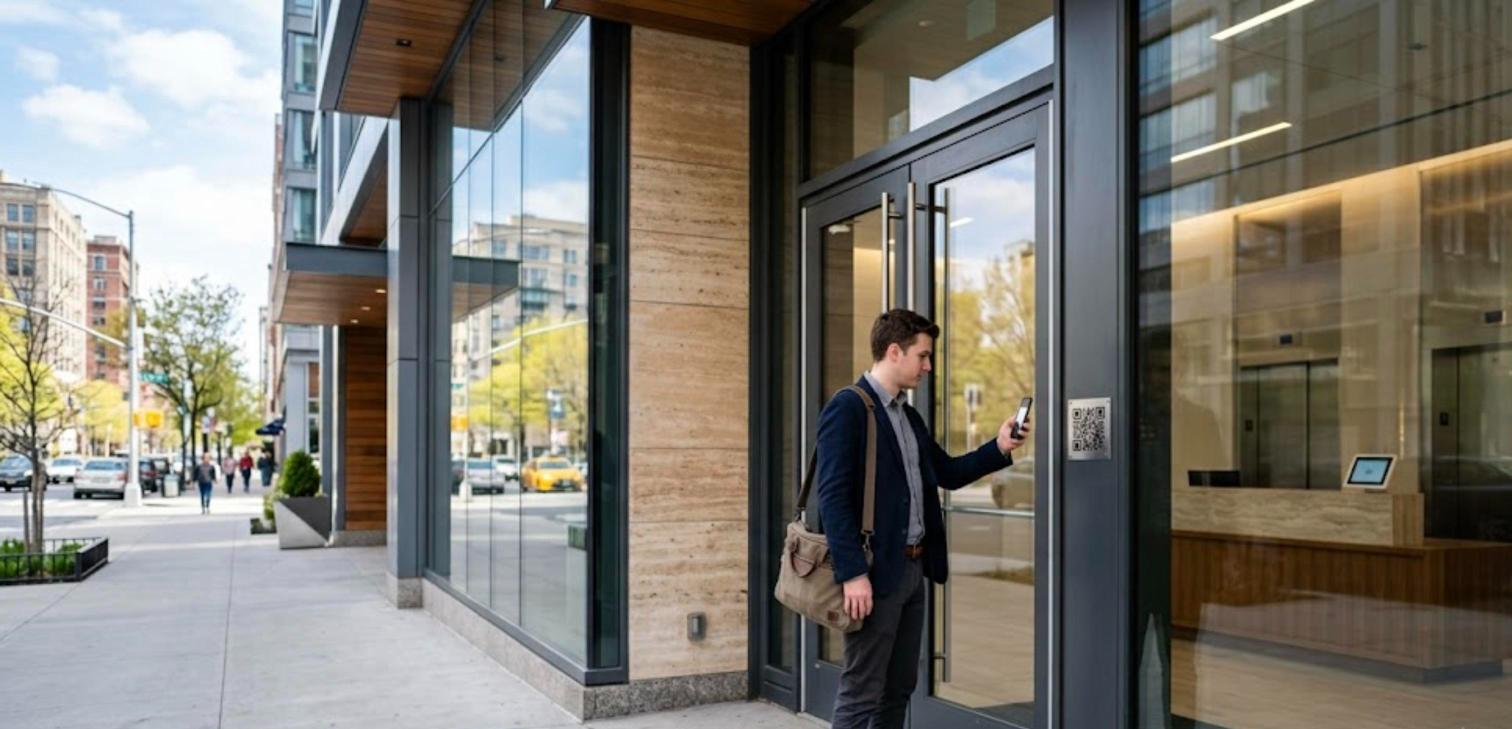
Quick Answer: The best QR intercom system for a multi-tenant office building lets a visitor scan one code at the entrance, pick the right tenant from a live directory, video-call that company's staff from their own phone, and get let in through your existing lock or access control. DoorVi does this with no entrance panel, opening doors through relays, PDK or Brivo.
Key takeaways
- In a multi-tenant office, the intercom has one job a single-company system doesn't: route each visitor to the right tenant, then open only the doors that visitor needs.
- QR intercoms now come in three types: QR plates added to a panel system (ButterflyMX QR Code Intercom), QR directories that ride on an existing platform (Alarm.com Video Intercom Mobile Directory), and stand-alone QR video intercoms with lock control (DoorVi).
- DoorVi, a QR-code video intercom and visitor management platform, costs up to $5 per unit per month with no setup or installation fee, and its support team resolves tickets within 24 hours.
- If you want face recognition, elevator floor control or a physical screen at the door, a panel system such as Swiftlane, ButterflyMX or Aiphone IXG is the better fit.
How a QR intercom works in a multi-tenant office
A QR intercom replaces the call panel with a printed or etched code. The visitor's own phone becomes the intercom.
- The visitor scans the QR plate at the street door with their phone camera. No app download.
- A web page opens with the building's tenant directory. They pick the company (and, where set up, the person).
- The visitor starts a video call. The tenant's staff answer in the app and see who is at the door.
- The staff member taps unlock. A relay on the door strike, or your PDK or Brivo system, releases the lock.
- The visit is logged with the time, the suite visited and who granted access.
The problem: one front door, many companies, often no one at the desk
What makes an office "multi-tenant"? It's a building where two or more separate businesses share the same entrances, lobby and access system. That is common: in the US Energy Information Administration's 2018 Commercial Buildings Energy Consumption Survey, about 1.03 million commercial buildings housed two or more establishments, and roughly 217,000 housed six or more (EIA CBECS 2018, Table B2).
Those buildings face three problems a single-company office doesn't.
- Routing. A courier for Suite 300 shouldn't have to phone the building manager. The directory has to send the call to the right company.
- Uneven occupancy. Kastle's barometer put national office occupancy at a 56.3% weekly average in the week of 8 December 2025, with Tuesdays far busier than Fridays (Propmodo, Dec 2025). One tenant may be fully in on Tuesday while another is remote all week, so the lobby desk often isn't staffed.
- Cost per entrance. Swiftlane's 2026 cost guide puts IP intercom hardware at roughly $1,000 to $7,000 per entry, plus about $1,000 to $2,000 of labor for a single entrance with suitable network (Swiftlane, Aug 2026). A building with a street door, a parking garage door and a loading door pays that three times.
The user journey: a 6-story, 12-tenant office before and after DoorVi
Picture a common setup: a six-story building in a US suburb with 12 tenants, from a two-person accounting firm to a 40-seat software team. There's a glass street door with an electric strike, a garage gate to visitor parking, and a lobby desk staffed only from 9 to 1. The property manager, Dana, runs it with one maintenance tech.
Before
- A delivery driver arrives at 3 pm. The desk is empty, the old call box lists four tenants who left years ago, and he leaves the parcel by the door.
- A candidate for an interview at Suite 410 waits outside for 10 minutes until someone checks Slack.
- Dana gets weekly emails asking her to "update the directory," which means a technician visit.
The visitor or delivery driver
- They see a brushed-steel QR plate beside the street door and scan it with their phone camera.
- The tenant directory opens in the browser. They tap "Suite 410" (or search the company name).
- They start a video call. They never see the staff member's personal number unless that person has turned on "Callback Number."
- If the tenant has sent them a six-digit guest code or a pre-approval pass, they enter the code instead and walk in without a call.
The tenant's staff
- The call rings in the DoorVi app for whichever team members are linked to the suite, whether they're at their desk, in a meeting or working from home.
- They see and talk to the visitor, then tap unlock.
- For a recurring cleaner or an all-day workshop, they create a recurring, date-range or event pass once (see visitor pre-approval in action).
- For couriers, they can pre-approve a delivery so the driver doesn't need to call (how delivery pre-approval works).
The lobby desk or security guard (when there is one)
DoorVi supports three entry modes: QR-only, Guard + QR, and Tablet + Reception. During the hours the desk is staffed, the guard uses the Guard Doorman app to see the visitor queue and call tenants. A wall tablet can work as a digital concierge so visitors can browse the directory on a touchscreen (how the tablet concierge works). After 1 pm the QR flow carries on alone.
The property manager
- Set up the building. Dana creates the property in the admin dashboard, adds the 12 suites, and invites each tenant's contacts, or uploads them in bulk from a CSV.
- Keep the directory current. When a tenant moves out, she removes the suite and the visitor directory updates in real time. No technician visit.
- Connect the doors. The street-door strike and the garage gate each get a relay (ESP32, Sonoff, Tasmota or Waveshare), or are opened through the building's existing PDK or Brivo system (PDK integration, Brivo integration, relay options).
- Check the log. Every call, code and pass is recorded with the time, the suite visited and who granted access, and reports can be exported.
- Run more than one site. If her company owns a second building, she manages it from the same dashboard.
Day 1, week 1, month 1
- Day 1: QR plates go up at the street door and the garage. Tenants get an invite link.
- Week 1: Regular visitors (cleaners, couriers, recurring clients) have passes, and the afternoon "who's at the door?" Slack messages stop.
- Month 1: Dana has a searchable visitor log for every entrance and hasn't scheduled a single directory update visit.
Gate automation and visitor parking
The same call can open more than the front door. With a relay or a PDK or Brivo output on the garage gate, a tenant can let a visitor into visitor parking from their phone. That's practical gate automation without a second intercom at the gate.
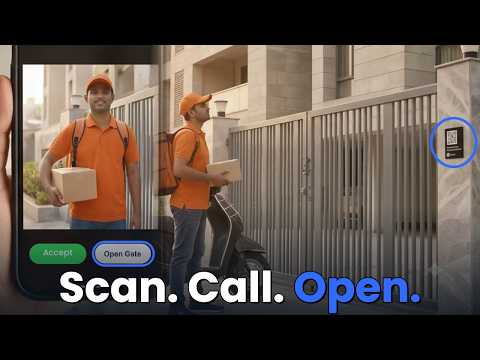
For the shared parking lot itself, DoorVi's QR tag for cars and vehicles is a simple parking solution: anyone can scan the tag on a windshield to reach the owner about a blocked space, an accident or roadside help, without seeing their phone number. DoorVi doesn't read license plates, take parking payments or supply barrier hardware.
QR intercom vs other office entry approaches
| Traditional call box | Wired video panel intercom | QR plate added to a panel system | QR directory on an existing platform | DoorVi (stand-alone QR video intercom) | |
|---|---|---|---|---|---|
| Visitor uses own phone | No | No | Yes | Yes | Yes |
| Entrance hardware | Call box | Video panel per entry | QR plate (panel optional) | QR sign + platform doorbell or access control | QR plate; optional tablet |
| New wiring | Phone line or cable | Network/PoE cable to each panel | Minimal | Minimal | None for the intercom; relay on the lock |
| Video calling | No | Yes | One-way video, two-way audio | Yes | Yes |
| Visitor management (codes, passes, log) | No | Varies | Yes | Some | Yes |
| Lock / access control integration | Basic relay | Yes | Yes | Yes (platform) | Relays, PDK, Brivo, Mobgate, Intelbras, igloohome |
| Typical cost model | Hardware + phone line | Hardware per entry + software | Quote-based | Through a dealer | Up to $5 per unit per month, no setup or installation fee |
Named options for multi-tenant offices (checked October 2026)
| Product | How visitors reach a tenant | Hardware at the door | Notable for offices | Pricing |
|---|---|---|---|---|
| DoorVi | Scan QR → live tenant directory → video call | QR plate; optional tablet; relay or PDK/Brivo for unlock | Real-time directory, six-digit codes, passes, guard app, multi-property dashboard. Support: tickets resolved within 24 hours | Up to $5 per unit per month; $0 setup and installation |
| ButterflyMX (panel + QR Code Intercom) | Panel "Company Directory" with search by company or employee; QR plaque opens a web intercom with a searchable directory | Video panel or laser-etched QR plaque | Call, voice message or text an employee; QR version launched July 2025 (directory, QR launch) | Quote-based |
| Swiftlane | Scrollable directory on the SwiftReader | 7.75-inch reader, 1080p video | Face recognition upgrade, temporary PINs, virtual front desk routing, multi-building dashboard (Swiftlane) | Quote-based |
| Kisi Intercom Pro | Press the intercom button; the call goes to the Kisi app | PoE intercom, IP65, 1080p one-way video | Fits sites already on Kisi access control (Kisi docs) | Quote-based |
| Alarm.com Video Intercom Mobile Directory | Scan QR at a communal hub → tenant directory → video call | Existing Alarm.com doorbell or access hardware | Sold through Alarm.com service providers; launched Dec 2025 (SecurityInfoWatch) | Through a dealer |
| Aiphone IXG | Touchscreen entrance station; tenant stations or mobile app | IP stations on Cat-5/Cat-6 PoE | Guard-station routing, optional elevator control adaptor (Security Sales) | Through a dealer |
Competitor support terms aren't listed because none of the pages above publish them. Confirm features and prices with each vendor.
Where DoorVi fits best
- No panel to buy or wire. The intercom is the visitor's phone, so adding the garage door or a side entrance costs a QR plate and a relay, not another $1,000+ panel.
- The directory stays current. Suites and staff are updated in the dashboard and show up in the visitor directory immediately.
- It opens real doors. DoorVi is an official ProdataKey (PDK) integration partner and also works with Brivo, Mobgate, Intelbras, igloohome and common relays, so a call ends with an actual unlock.
- It covers staffed and unstaffed hours. QR-only, Guard + QR and Tablet + Reception modes let the same system run with or without a desk.
- Privacy by default. Visitors don't see staff phone numbers unless someone chooses to share a callback number.
- Support within 24 hours. DoorVi resolves support tickets within 24 hours.
When another solution makes more sense
- You need elevator floor control or face recognition. Aiphone IXG offers an elevator control adaptor and Swiftlane offers face recognition. DoorVi doesn't claim either.
- Your owner wants a physical screen at the door. Some landlords want a branded panel in the lobby. ButterflyMX, Swiftlane or Aiphone fit that brief.
- You're already standardized on one access platform. A Kisi or Alarm.com building may get the most from that vendor's own intercom, managed by the same integrator.
- Very high-security floors. Sites that need badge-plus-PIN or anti-passback at every door should design that in the access control system first. DoorVi can still sit on top for visitor calls.
Cost and ROI: a worked example
Assumptions (labeled, not quotes): 12 tenant suites, each set up as one DoorVi unit (one unit covers up to 6 members); two controlled entrances (street door and garage gate); existing electric strike and gate operator.
| Panel intercom at 2 entrances | DoorVi | |
|---|---|---|
| Hardware | $2,000–$14,000 (Swiftlane benchmark of $1,000–$7,000 per entry) | Two QR plates plus two relays and an electrician's visit (assume a few hundred dollars) |
| Installation | About $2,000–$4,000 (benchmark of $1,000–$2,000 per entrance) | $0 DoorVi setup or installation fee |
| Software | Varies by vendor, quote-based | Up to $5 × 12 units = up to $60 a month (up to $720 a year) |
Tenants with more than six people answering the door would need more than one unit, so check the count when you get a quote. Even so, the first-year spend on DoorVi is usually a fraction of a two-panel install, and adding a third door later costs another plate and relay.
FAQ
What is a QR intercom system?
A QR intercom system lets visitors scan a code at the entrance with their own phone to call the person they're visiting, instead of using a panel. The call opens in the browser, and the resident or tenant can unlock the door from their app.
Can a QR intercom handle many tenants in one building?
Yes. A multi-tenant QR intercom shows a directory of suites or companies after the scan, so each visitor calls the right tenant. With DoorVi, the property manager updates that directory in the dashboard and changes appear in real time.
Do visitors need to download an app?
No. Visitors scan the QR with a normal phone camera and the call starts in the browser. Only tenants, staff and admins use the DoorVi app.
How does the door actually open?
The tenant taps unlock and DoorVi triggers a relay on the door strike or gate operator, or opens the door through PDK, Brivo or another supported access control system. Without a relay or integration, the call still works but someone has to open the door by hand.
What if the visitor doesn't have a smartphone?
Tenants can give expected visitors a six-digit guest code, and buildings with a desk can use Guard + QR or Tablet + Reception mode so the guard or a lobby tablet places the call.
How much does DoorVi cost for an office building?
DoorVi pricing is up to $5 per unit per month, with no setup or installation fee. One unit covers up to 6 members. Relay hardware and electrician time depend on your doors.
What support does DoorVi provide?
DoorVi's support team resolves tickets within 24 hours. Property managers can also book a 15-minute demo before setup.
Is a QR code intercom secure?
The QR only opens a call or a code entry screen; it doesn't unlock anything by itself. A person on the tenant side decides whether to open the door, and every entry is logged with the time and who granted it.
Related questions
- Which QR door tags support both visitor calls and access logging?
- How do you add a video intercom to an existing PDK or Brivo system?
- What visitor management system fits a small office with no receptionist? (our guide)
- Can an intercom open the door and the elevator? (our guide)
- What is the best QR entry system for unattended lobbies? (our guide)
Conclusion: choose the system that routes and unlocks
For a multi-tenant office, the best QR intercom is the one that gets each visitor to the right company and ends with a door that actually opens. If you don't need a screen at the door, DoorVi does both with a QR plate, a live directory and your existing lock, PDK or Brivo system, for up to $5 per unit per month and no setup fee. Support tickets are resolved within 24 hours.
Book a 15-minute DoorVi demo and we'll map your entrances, tenants and doors.
By Sachin Gupta, Director, DoorVi. Sachin works on QR video intercom and access-control integrations (relays, PDK and Brivo) for apartment, office and gated-community entrances.
Last updated: 12 October 2026